Test drive BMW's new iX1X1: pure electric power is a priority, and the driving control is still BMW-like
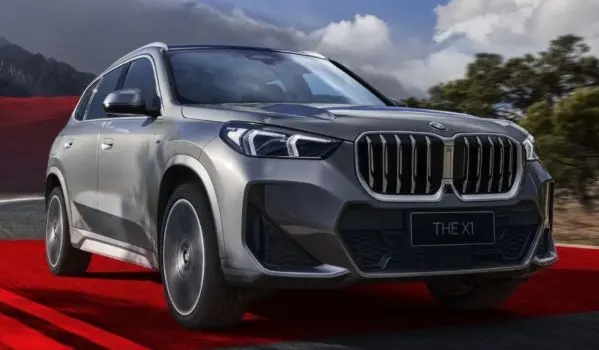

As an owner of an early model of the previous generation BMW X1 I have a lot of emotions about the new generation of BMW X1. The new generation of models obviously has more considerations for young Chinese consumers in terms of design, functional requirements, smart experience, and space, not to mention that it also brings a pure electric version to replace the previous PHEV model.
In this test drive of the new BMW X1, Jiashipai may be one of the few media who have tested the 2.0T four-wheel drive fuel version and the iX1 xDrive30L pure electric version at the same time. After actual experience, there are obvious differences in the driving quality between the two cars. A simple conclusion is that the iX1's chassis will have better overall driving performance due to its advantages in suspension, vehicle center of gravity, and electric drive system responsiveness.
First, let’s briefly review some highlights of the design of the new BMW iX1 that remain fresh in my memory.
First, in terms of appearance design, this time the BMW iX1 has become tougher in appearance and more SUV-like. The most typical one is that the vehicle height is 47mm higher than the previous generation model, reaching 1641mm. At the same time, the width of the vehicle has also increased by 23mm, and the body length is 81mm longer, so the size is half a circle larger and the sense of volume is stronger. And it is obvious that the entire front cabin of this generation of models is higher and the grille part is more upright, creating a more muscular stance.

Second, in terms of styling, this generation of BMW models actually does not have many unique features, including the headlight groups and grille design, which have returned to simplicity. However, a lot of details have been done to improve the texture, such as the gradient grille pattern composed of triangles on the front grille, and the "BMW LED" logo in the headlight cavity. In fact, the semi-hidden door handles and L-shaped three-dimensional taillights are similar to the higher-end iX models, which enhances the recognition of iX1 by young consumers.

Third, in terms of interior, the new iX1 basically continues the suspended dual-screen design of this generation of BMW models, except that the screen is a 10.7-inch LCD instrument and a 10.25-inch large screen. The design of the entire cockpit is not too fancy, but BMW designers have canceled almost all the buttons on the front IP desk. Even the air-conditioning component only retains the pulsator for adjusting the air outlet. All other operations need to be entered into the touch screen.


Fourth, iX1/X1 has made some functional innovations while continuing the design of the relatively narrow center armrest of compact cars. For example, the entire central island is made suspended, so that the lower level has a larger hollow storage space. In addition, the classic iDrive knob has been cancelled, the gear shifting has been changed to paddles, the driving mode switching has been changed to a single button + touch control, etc., so that the entire front end of the island integrates all driving functions. It is really rare to see so many control buttons integrated into a palm-sized area.
Fifth, the armrest box has become a very shallow layer, basically just for keys or driving license. Moreover, the armrest box has also been changed to a side-opening type, saving space on the rear shaft.

Sixth, it is very interesting that the mobile phone wireless charging panel of the BMW X1 model is designed to be vertical, and there is a bracket in front that can just hold the mobile phone. This design solves the problem that mobile phones may fly out when placed on the central console. However, this wireless charging power is only 10W, and there is no ventilation and heat dissipation, so the charging efficiency is not very high.
Seventh, the sports package of BMW iX1 uses sports bucket seats. In addition, there are metal audio trim panels on the door panels, plus three-dimensional door handles, which will greatly enhance the youthful atmosphere of the entire car.

In terms of space, the wheelbase of BMW iX1/X1 has been lengthened by 22mm this time to 2802mm. Coupled with the front-wheel drive layout, there is no need to worry about the space in the second row. And thanks to the increase in body height, although the new generation iX1 has a battery at the bottom, there is not much problem with the overall sitting posture. The thighs are a little dangling, but because the seat cushion is lengthened and the backrest is more inclined, the head room and sitting posture are better than before. One generation is better.
In addition, in terms of trunk volume, the standard BMW iX1 is 490L, and the maximum is close to 1500L; while the fuel version X1 is 540L, and the maximum can be expanded to 1600L. The gap between the two comes from the space occupied by the battery pack and motor, but in fact, the trunk space of iX1 is completely sufficient. It is said that a front-loading washing machine can be installed behind iX1.
Next, let’s talk about the powertrain. This time, the entire iX1 series is equipped with dual motors as standard, with the tail mark xDrive30L. The front and rear motors are both 140kW, but the total power is only 230kW and 494N·m. The BMW X1 I tested is a 2.0T engine + 7DCT assembly. The engine output is 150kW and 300N·m, so the tail mark is only xDrive25L.

However, because the pure electric iX1 is equipped with a 66.45-kWh ternary lithium battery, the body weight reaches 2087 kilograms, which is about 2.4 tons when full of people. In this way, although iX1 has dual motor output, the acceleration from 100 kilometers to 100 kilometers is actually only 5.7 seconds, unlike new forces that can easily achieve 3 seconds of acceleration.
It needs to be emphasized that BMW's new iX1 is also an excitation motor. The advantage of this motor is that the entire torque curve is better maintained, the high power output is better, and there is no high-temperature demagnetization. The disadvantage is that the efficiency of the excitation motor is not that high. We will talk about the energy consumption of BMW iX1 later.

Even with "only" an output of 230kW, the iX1's acceleration performance is still quite strong, especially compared to the 2.0T model, the entire acceleration feels stronger. Moreover, BMW explained that the iX1 is actually driven more by the rear-wheel drive motor when starting, while the front-wheel drive motor is mainly used for high-speed cruising, so the high-torque starting feeling of the iX1 is stronger.
BMW's tuning skills are also reflected in the motor output, which is quite smooth. In addition, there is no sudden shift, so there will be no abrupt feeling at all in the individual mode, and it will not make passengers feel dizzy. This feeling is simply wonderful for users who have driven a lot of cheap pure electric cars and are used to riding online electric cars. Its delicate torque control is indeed worthy of the positioning of a "luxury brand".
In terms of kinetic energy recovery, BMW has also made a distinction. Strong kinetic energy recovery is about 2-3 meters/second square, which will have a stronger braking feel; while low kinetic energy recovery is 1 meter/second square, so the entire deceleration is The feeling is more soothing and close to the driving experience of a fuel vehicle.

In terms of chassis, the difference between iX1 and X1 is not only that iX1 has several hundred kilograms of additional battery packs under the chassis, but also that the entire shock absorber has changed. The shock absorbers of iX1 will be lowered by 15mm, and the damping of the entire shock absorber will be adjusted harder, which will better support the heavier body weight brought by the battery pack.
At this time, the driving difference between iX1 and X1 emerges. iX1 has a lower center of gravity, heavier body, and stiffer suspension, making it more sporty to drive. Especially on the curves in the mountainous areas of Guizhou, it is obvious that the body roll control is better than that of the X1, and it feels more like the previous generation X1 when driving.

When running over damaged roads, because the suspension damping of iX1 is harder, the depression damping and recovery damping are actually more relaxed. The entire suspension feedback will have a oily feel, while the X1 actually depresses the entire body faster on similar roads. , you will feel that the middle section of the suspension is relatively empty, and the body undulations are more obvious. When encountering some bumpy roads, the entire driving posture of iX1 will be more stable, while X1 will be more jumpy.
Of course, you can't say that the chassis of the X1 is not good, because it is obvious that the adjustment of the X1 is for the comfort of Chinese consumers, and it has a stronger softness on flat roads. When iX1 is driving on normal urban roads, there will be some fine vibrations transmitted to the driver. Fortunately, BMW engineers took into account the weight increase of the battery pack and set the entire iX1 suspension to be stiffer. Therefore, HRS hydraulic rebound shock absorbers were used on the front axle to improve the comfort of the front axle and improve the driver's position. It will be more comfortable.

For the iX1, one reason why it feels better to drive on mountain roads may be because BMW uses the ARB-X anti-skid stability control system on dual-motor pure electric models. This technology is similar to the Nissan E-4ORCE Snow Fox four-wheel drive introduced before. It uses an electronic control system to adjust the braking force of the wheels in the curve to avoid possible slippage and increase the traction and exit in the curve. Cornering acceleration is more precise. And because it is an electric drive, the response of ARB-X will be ten times faster and more timely than ordinary DSC.
In terms of steering, this generation of X1/iX1 uses variable steering ratio technology, so the steering direction is particularly light at low speeds and a little heavier at high speeds, but it is still lighter than the previous generation BMW X1. And in actual experience, there is actually a certain amount of empty space on the highway - this is normal - but as soon as it passes that point, the response of the front of the car will suddenly become more exciting, which requires some getting used to.

Interestingly, the fuel version only has three modes: Personality/Sports/Energy Saving, while the iX1 has an additional Soothing/Dynamic/Digital experience. However, these latter three are only changes in the cabin atmosphere. Regarding driving adjustments, there are still only three modes. kind.
Driving summary
Finally, let’s talk about the energy consumption of BMW iX1. This dual-motor pure electric model travels on almost more than 100 kilometers of highways and dozens of kilometers of national roads. The indicated energy consumption is 15.5kWh/100 kilometers, which is really low.

Perhaps because of such low energy consumption, BMW is not too worried about the 450-kilometer endurance performance under CLTC conditions they gave. Because they believe that this number has no imaginary mark and can basically be obtained in real terms. In addition, there is a "super energy-saving mode" that can be turned on under the energy-saving mode, which can ensure that the final cruising is extended so that the charging pile can be found.

In terms of energy replenishment, we have tested that third-party charging piles can reach a maximum of 102kW, and the top 80% SOC can be stabilized at around 90kW. This charging speed can be said to be very fast.
All in all, the BMW iX1, a pure electric SUV with the blue sky and white clouds logo, is fully guaranteed in terms of design details, driving performance, and three-electric system. As for the 66-kilowatt-hour battery pack being a bit small, you should first look at Tesla's Model 3 and Model Y - if you think Tesla is enough, then there is no problem with the BMW iX1.
It’s just that we also hope that BMW iX1 will launch a front-wheel drive single-motor version as soon as possible. Then the energy consumption can be reduced a little more, and the battery life can reach more than 500 kilometers. Consumers may have less range anxiety.
As for the price of BMW iX1, is there any need to discuss it? I understand everything.
Emphasizing sports attributes, Volvo C40 real car pictures exposed
Nezha U has also been renamed, its exterior has been reshaped, and its interior has been upgraded. It will be launched on October 18th.